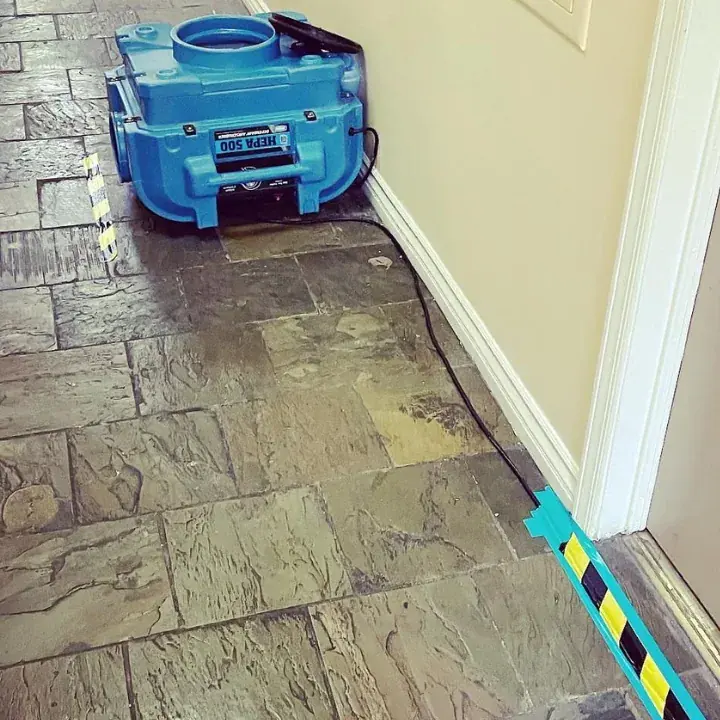
Most of the tract homes across South LA sit on concrete slab foundations, with copper water lines running under that slab. When one springs a pinhole leak, water escapes under your floor where you cannot see it, and the first sign is often a warm spot or a water bill that jumped overnight. Slab leaks are the signature water problem in this part of Los Angeles, and finding one early is what saves your floors.
What a slab leak is, under the slab
A slab leak is a leak in the pressurized copper supply lines buried under your concrete foundation. Decades against soil and hard water wear the copper from the outside in until it finally fails.
- The lines are under the slab, so the water has nowhere obvious to go.
- It escapes under the flooring, saturating the slab and wicking up into the walls.
- Hidden, a slab leak can run for weeks before anyone notices.
This is different from a burst pipe above the floor and from a corroded galvanized line in the walls. A slab leak is under your feet, which makes detection the whole game.
Detection first, the smallest opening we can make, and a verified dry slab. That is how a hidden leak stops taking your floors.
Warning signs in a South LA home
Slab leaks give themselves away if you know what to watch for.
- A warm spot on the floor, from a leak in the hot water line.
- A water bill that climbed with no change in how much you used.
- The sound of running water when every fixture is off.
- Damp, warped, or raised flooring, or a musty smell near the floor.
- Cracks in the slab or moisture wicking up a wall from the base.
A leak also wastes a surprising amount of water, and the EPA notes how much household leaks waste. Catching it at the warm-spot stage is far cheaper than after the floors buckle.
How we find it and dry it
The goal is to pinpoint the leak so we open the smallest possible area of your slab, not the whole floor.
- We use acoustic and electronic equipment to locate the leak under the slab.
- Pressure testing confirms which line is failing and where.
- We access the leak at that one spot and keep the opening small.
- Then we dry the slab, flooring, and framing, monitoring daily until it reads dry.
The IICRC standards guide how we handle the water damage once the leak is located, and our structural drying process takes the slab to a verified dry reading. Concrete gives up moisture slowly, so caught early, drying in place can save flooring that would otherwise come out.
What does slab leak repair cost in South LA?
In South LA, a slab leak job typically runs $1,500 to $6,000 or more, depending on where the leak is, how much detection it takes, and how much drying the slab and flooring need. Detecting and drying a single warm-spot leak sits at the low end; a leak that ran for weeks and soaked flooring across rooms sits higher.
The water damage from a sudden slab leak is often covered by insurance even when the pipe repair is not, so we document the leak and the resulting damage carefully. You can size a loss first with our cost calculator.
Warm spot on the floor or a water bill that jumped? That can be a slab leak running right now. Call and a South LA crew is on-site within the hour to find it.
Call (213) 554-5990We heard water running with everything shut off and the hallway floor had a warm patch. It turned out to be a slab leak, right before we were hosting family. The crew found it without tearing up the whole floor, opened just one small area, and dried the slab over a few days. They kept us in the loop the whole time.
Denise A. · Vermont Knolls, South LA